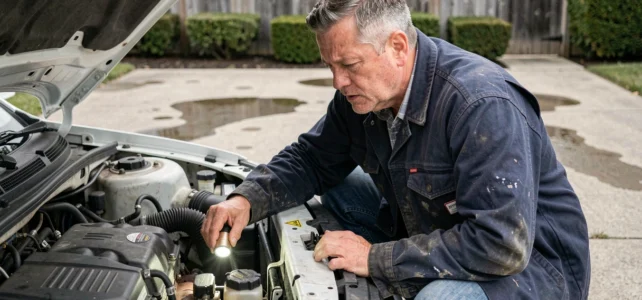
A starter converts the electrical energy from the battery into mechanical rotation to start the internal combustion engine. When this part fails, the engine remains silent despite a battery in good condition. Several methods allow for temporarily bypassing a defective starter, but all depend on the type of transmission and the overall condition of the vehicle.
Stuck solenoid: the percussion method on the starter
The most common problem with an aging starter comes from stuck brushes or a jammed solenoid. The solenoid is the cylindrical part of the starter that receives the electrical impulse when the ignition key is turned. Over time, the internal contacts oxidize and remain in the open position.
The percussion method involves lightly tapping on the body of the solenoid with a screwdriver handle or a small metal bar while a second person operates the ignition. This mechanical shock is sometimes enough to free the brushes and restore the electrical circuit. The maneuver assumes that the starter is accessible from above or below the engine compartment, which is not the case for all models.
A detailed guide explains how to start with a faulty starter by precisely locating the striking area according to the engine configuration.
If the starter responds after percussion, the problem will return. This trick only postpones the replacement of the part, it does not repair it. Plan for a visit to the workshop in the following days.

Pushing start: conditions and limits depending on the transmission
Pushing start works on a simple principle: to mechanically drive the engine through the wheels instead of using the electric starter. The driver engages second gear, keeps the clutch depressed, and then releases it sharply when the vehicle reaches a sufficient speed.
Manual transmission: the only compatible transmission
On a manual transmission, the direct mechanical link between the wheels and the crankshaft allows for forcing the engine to rotate. The procedure requires a downhill slope or at least two people to push the vehicle.
- Turn the key to the ignition position to activate the ignition circuit and fuel injection
- Engage second gear (smoother than first for the engine) and keep the clutch pedal depressed
- Release the clutch firmly when the vehicle is moving at a brisk walking pace, then gently press the accelerator as the engine starts to turn
The maneuver succeeds in the majority of cases if the battery retains enough charge to power the ignition and injection. A battery warning light illuminated on the dashboard before the attempt indicates a broader issue than just a faulty starter.
Automatic transmission: do not attempt a push start
An automatic transmission cannot be driven by the wheels like a manual transmission. Its transmission relies on a hydraulic torque converter that does not transmit rotation in reverse. Pushing a vehicle equipped with an automatic transmission only serves to move it to a safe location, not to start the engine.
For these vehicles, the only option in case of a faulty starter remains towing or calling a professional.
Quick diagnosis: distinguish a starter failure from a battery problem
Before attempting any troubleshooting method, it is essential to correctly identify the source of the problem. Confusing a dead battery with a faulty starter leads to unnecessary manipulations.
- A single sharp click when the key is turned generally indicates a starter solenoid that receives power but fails to engage the pinion: the problem lies with the starter
- A repetitive and rapid clicking noise rather indicates a battery too weak to power the starter: first attempt a jump start with another vehicle
- If no noise occurs and no warning lights illuminate on the dashboard, the problem is upstream of the starter (blown fuse, loose ground cable, or completely dead battery)
Checking the condition of the battery terminals takes less than a minute. Oxidized or poorly tightened terminals reproduce exactly the symptoms of a faulty starter. A simple cleaning with fine sandpaper may be enough to restore electrical contact.
Mechanical failure warranty: a financial angle often overlooked
Most articles on the starter focus on the technical aspect. However, the financial aspect deserves to be anticipated. Some insurers offer an optional mechanical failure warranty, distinct from simple liability insurance, which covers failures of parts like the starter, alternator, or engine electronics.
This option, charged as a monthly supplement on the auto contract, covers towing and sometimes the replacement of the part. It specifically targets dry failures that immobilize the vehicle without an accident. Checking the terms of your contract before paying for a repair out of pocket can represent significant savings.
Replacing a starter remains a common operation in the workshop. A faulty starter that still responds to percussion or push starting usually allows time to plan the intervention without urgency. Driving without a reliable starter mainly exposes you to the risk of getting stuck in a location where neither a slope nor assistance from a third party will be available.