
On the Camino de Santiago, there are now as many smartphones as there are pilgrims’ staffs. Influencers are live-streaming their stages, apps offer geolocated prayers, and online communities exchange digital ex-votos.
This shift from the veneration of saints to hybrid forms, blending devotion and pop culture, has a little-known name: hagietomamophilia. This term refers to a pronounced, sometimes passionate attachment to holy figures and the objects associated with them, whether they are relics, statues, pious images, or online content.
Technorituals and Digital Sacredness: Devotion Beyond Walls
An article published in September 2026 on the CASTAC blog describes what researchers call “technorituals”: the use of media technologies as an extension of ritual space, creating a form of “digital sacredness.” We are no longer just talking about watching a mass on replay.
Live prayer videos in front of reliquaries, communities organizing novenas on group messaging apps, broadcasts of processions commented on like sporting events: the veneration of saints is migrating to digital spaces that function as extensions of ritual. The phenomenon goes beyond the simple use of a screen. It transforms the relationship to the sacred into a continuously accessible, decentralized, and shareable practice.
This type of initiative illustrates well how hagietomamophilia on Votre Psy takes forms that previous generations would not have imagined: people collect devotions as they collect kilometers.
Tourist and Heritage Pilgrimage: When the Saint Becomes a Destination
It would be a mistake to think that hagietomamophilia only concerns practicing believers. A study published on August 29, 2026, in Tourism Geographies, based on a bibliometric analysis of 597 publications indexed in Scopus, shows that experiential and heritage approaches now dominate pilgrimage research, while the institutional and religious dimension is gradually losing its centrality.
The Camino de Santiago is the most telling example. According to La Croix, “our pilgrimage is followed like a soap opera”: walkers document each stage, and some accounts accumulate audiences comparable to those of travel content creators. The patron saint becomes a narrative pretext, a thread for a personal story shared online.
This study also notes that issues of governance and sustainability of pilgrimage sites remain underdeveloped. Feedback varies on this point, as the overuse of certain paths poses concrete problems of maintenance, waste management, and coexistence with local residents, without a clear framework having emerged.
Relics, Restitution, and Heritage Tensions in Hagietomamophilia
The veneration of saints is not limited to individual practices. It engages heritage and diplomatic issues that directly affect modern culture. In Russia, the discovery of relics attributed to a medieval prince has been described as a “miracle” by official representatives, with plans to send a fragment to the front, according to Meduza. The political instrumentalization of devotion to saints is not new, but it takes on a very contemporary dimension here.
Objects of devotion circulate in a globalized market where the sacred and market value intertwine. The growing cultural restitution movements around the world show that hagietomamophilia, far from being a mere hobby for collectors, is part of power dynamics between states, religious institutions, and the art market.
Objects Involved in These Tensions
- Bony or textile relics, whose authentication is often contested and whose circulation sometimes escapes national legal frameworks.
- Votive statues and icons, which can reach high prices at auction when they leave their original liturgical context.
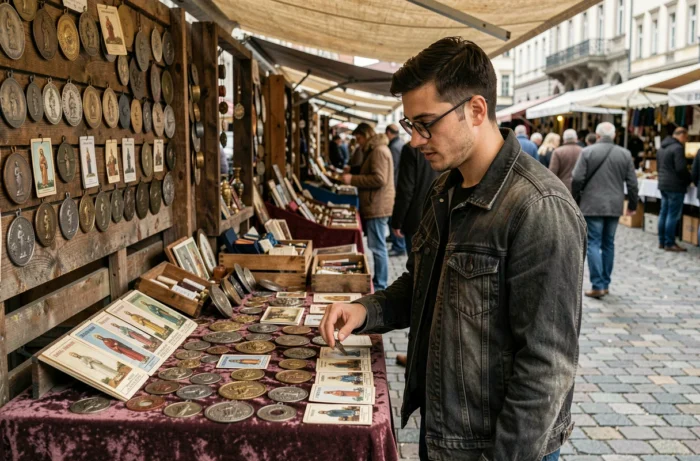
- Pious images and old medals, objects of specialized collections where sentimental value and numismatic value merge.
Saints and Pop Culture: From Fan Culture to Devotion
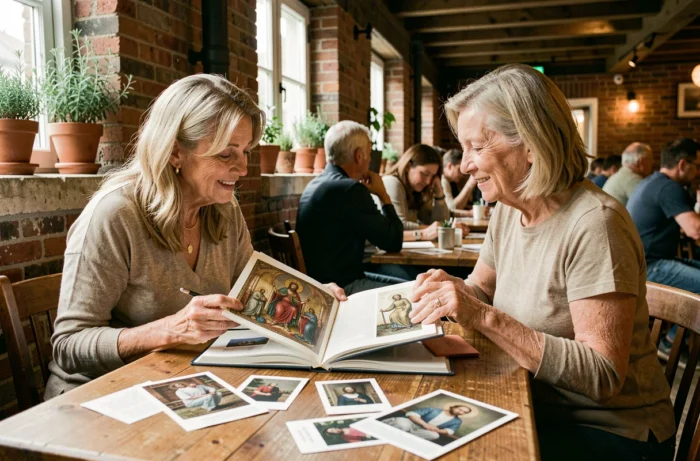
A post published in August 2026 on the blog of the Scottish Graduate School for Arts & Humanities draws a parallel between Taylor Swift fans (the “Swifties”) and medieval devotees, under the title “Saints and Swifties: A Match Made in Breakable Heaven.” The idea is not to provoke but to point out common mechanisms: the collection of objects related to an admired figure, the pilgrimage to symbolic places, the formation of communities structured around a shared narrative.
These mechanisms can be found in contemporary hagietomamophilia. Facebook groups dedicated to patron saints function like fan clubs. Online shops for miraculous medals use the same marketing codes as music merchandising. The boundary between devotion and fan culture becomes porous, and it is precisely this blurring that characterizes the influence of the veneration of saints on modern culture.
The phenomenon is not just a sociological anecdote. It questions how we build collective ties around tutelary figures, whether they are canonized or simply famous. Hagietomamophilia acts as a revealer of contemporary needs for rituals and belonging, well beyond the strictly religious framework.
What is striking, in essence, is the continuity. Pilgrims in the Middle Ages collected lead badges at each stage of their journey. Digital pilgrims collect stories and virtual badges. The object changes, the gesture remains.