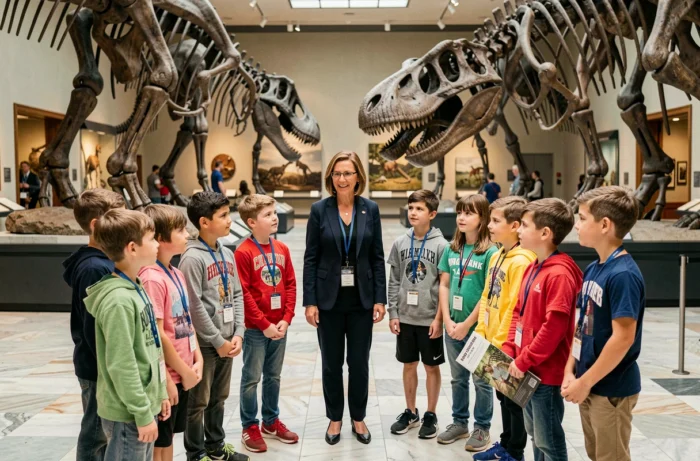
Organizing a school trip often involves juggling permissions, budget, educational program, and transportation logistics. Even before choosing a destination, the teacher must rely on reliable resources to frame their project. Since the MENE2310475C circular of June 29, 2023, each student must be able to benefit from at least one school trip during their compulsory education. This right changes the game: the school trip is no longer a bonus, it is a commitment to uphold.
Regulatory framework for a school trip: what the 2023 circular imposes
Most online guides detail the practical steps (bus reservation, picnic, permission slips). Few focus on the legal foundation that conditions everything else.
The circular of June 29, 2023, establishes a clear principle: the school must guarantee at least one travel or outing experience to each student during compulsory education. In practice, this means that educational teams can no longer be satisfied with offering outings to “voluntary” classes. Each cycle must include this possibility in its project.
For teachers looking to structure their approach, several platforms centralize useful information. Notably, there are resources on the Partir en Classe website that detail administrative obligations and training related to school trips.
The issue of supporting students with disabilities has also evolved. The law of May 27, 2024, transferred the responsibility for AESH during lunchtime to the State, which concretely expands the possibilities for support during day trips. A student who benefits from an AESH should no longer be excluded from an outing due to lack of funding for the accompanying person.
Accessibility and inclusion: preparing a school trip for all students
Have you ever noticed a student staying in class while their classmates go on a trip? This situation, still common, often results from a lack of anticipation regarding specific needs.
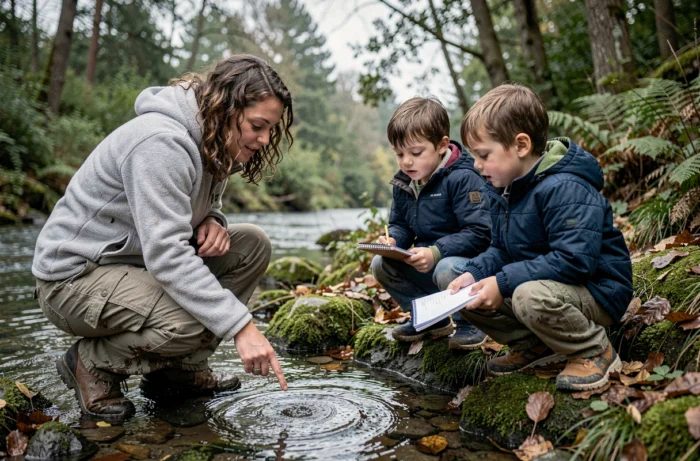
Accessibility is not limited to wheelchairs. It also concerns sensory, linguistic, and dietary needs. A hearing-impaired student in a noisy museum, a non-native speaker facing a guide who speaks quickly, a student with a strict diet during lunch: each situation requires distinct preparation.
Anticipating needs before choosing the location
The choice of the visit site should begin with a quick audit of the class. How many students have a PAP, a PPS, or a PAI? What adaptations does the site offer? Museums and natural parks do not all provide the same level of accessibility.
European studies show that the most successful outings integrate students with special educational needs from the design stage, rather than planning adaptations at the last minute. This requires contacting the site in advance and checking a few concrete points:
- The presence of visual or tactile supports for visually impaired or deaf students
- The possibility of adapting the pace of the visit (breaks, shortened routes) for students who tire easily
- Catering options that take into account allergies and specific diets
- The actual physical accessibility of the route, beyond the mention of “accessible PMR” on the website
This preparatory work takes time, but it prevents de facto exclusions on the day itself.
Digital tools to enrich the school trip before and after the visit
The trip does not start on the bus. It starts in the classroom, sometimes several weeks in advance, when the teacher prepares the students for what they will discover.
Preparing in advance with virtual visits
Several museums now offer free virtual visits that allow students to familiarize themselves with the locations. The Micro-Folies, deployed by the Toulouse Metropolis and other communities, provide access to digitized collections from major national museums. The Louvre also offers a virtual tour accessible online.
The educational interest is twofold. The student arrives on-site with visual references, reducing sensory overload. And the teacher can target the works or spaces they want to emphasize, rather than following a route imposed by the guide.
Leveraging the trip upon return to class
The return to class is often the neglected part of the school trip. Students recount their day, the teacher conducts an oral review, and then they move on. This is unfortunate because memory anchoring occurs in the days that follow.
Some simple practices enhance learning:
- Asking students to produce a written or drawn report within two days following the trip
- Revisiting a concept seen in class through a concrete example observed during the visit
- Using photos taken on-site as support for a visual arts or geography project
Budget and funding for a school trip: concrete avenues
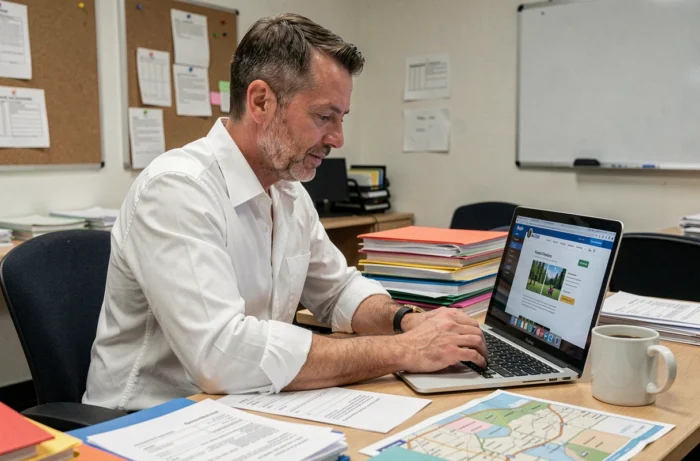
The cost remains the primary barrier. Transportation, entry fees, meals: the bill can add up quickly, especially for classes located far from major cultural cities.
The school cooperative is not always sufficient. Teachers can seek grants from local authorities (town hall, department, region), which vary greatly from one area to another. Some regions fully fund transportation for day trips.
Partnerships with local organizations (nature associations, artisans, farms) can sometimes allow for low-cost or even free outings. A trip to an educational farm near the school often costs less than a bus trip to a distant museum, while still offering comparable educational richness.
The free admission of national museums for school groups is a lever often underutilized. However, it is necessary to book several months in advance, as free slots fill up quickly.
The choice of location depends as much on the program as on the actual budget of the class. A successful outing is not necessarily a distant or expensive one. It is an outing where each student learns something they could not have learned within four walls.