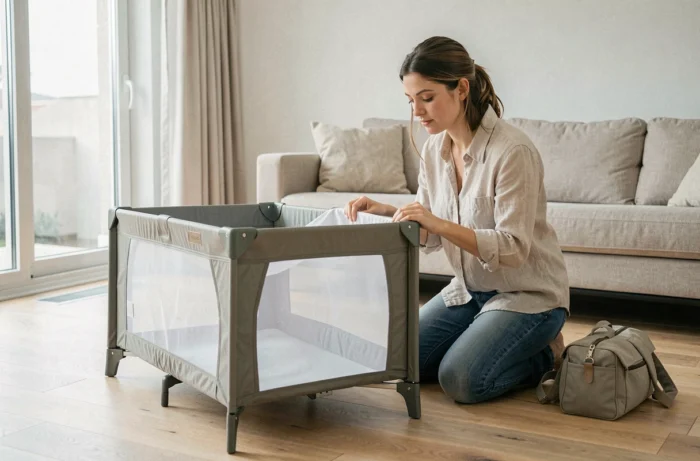
The travel crib for babies now comes in dozens of models, with weight and size variations that can range from simple to double depending on the design. For parents traveling by train, plane, or simply visiting relatives, these differences are not trivial. Comparing technical specifications before purchase helps avoid equipment that is too heavy for the intended use or, worse, a model that does not meet safety standards.
Weight and folded dimensions: what the differences between models reveal
The first instinct is to look at the weight listed on the product sheet. Classic travel cribs generally weigh between 9 and 12 kg, a size suitable for the car but impractical for walking or public transport.
The segment of so-called ultra-light models targets a significantly lower threshold. Some models weigh less than 6 kg, which radically changes portability, especially for air travel where every kilo counts in luggage.
| Criterion | Classic travel crib | Ultra-light travel crib |
|---|---|---|
| Average weight | 9 to 12 kg | Less than 6 kg |
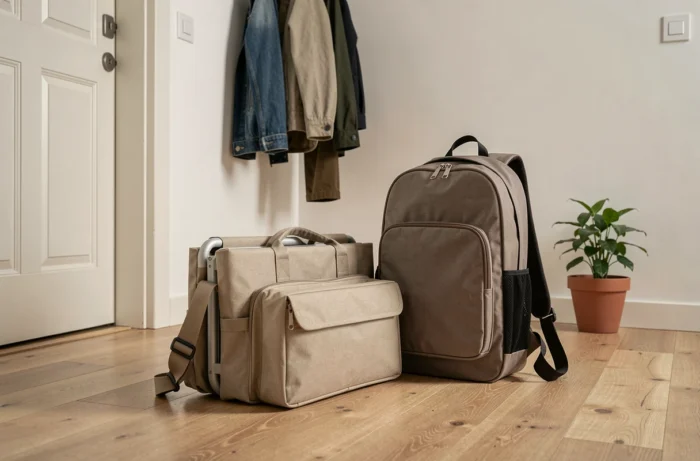
| Folded size | Volume of a small hard suitcase | Fits into a compact carrying bag |
| Setup time | Variable, sometimes several minutes | Setup often in a few seconds |
| Sleeping levels | 1 to 2 levels | 1 to 2 levels depending on the models |
| Main use | Extended stays, grandparents’ house | Frequent transport, plane, train |
The volume once folded deserves as much attention as the weight. A 5 kg crib that doesn’t fit in a small car’s trunk loses part of its appeal. Checking the exact dimensions of the folded crib on the technical sheet remains the most reliable action before any purchase.
To delve into the specifics of compact models, choosing a compact and lightweight travel crib requires comparing this data to one’s own mode of transport.
EN 716 standard and rejection rates: safety behind lightness
The European standard EN 716 regulates the manufacturing of folding cribs for children. All guides mention it, but few detail the level of selection it actually imposes on manufacturers.
According to LaListedebebe, about 75% of prototypes are rejected during approval by PMI services in France. The main reasons concern mattress sinking and structural stability. This figure shows that the race for lightness does not come without technical compromises.
A lighter frame uses less massive alloys or plastics. The risk, if the design is rushed, lies in lateral rigidity and the stability of the sleeping surface under the child’s weight. Models that pass certification generally combine an aerospace-grade aluminum or lightweight steel frame with reinforcements targeted at stress points.
Concrete checks before purchase
- The mattress must be firm and fit the exact dimensions of the base without leaving any gaps on the sides (a maximum of one finger between the edge of the mattress and the wall).
- The mesh walls must allow for continuous air circulation, reducing the risk of CO2 re-inhalation during sleep.
- The locking mechanism must engage audibly and show no lateral play once the crib is unfolded.
- The mention “compliant with EN 716” must appear on the packaging or instruction manual, not just in the online description.
An uncertified lightweight crib poses a real risk, regardless of its price or popularity on social media. Compliance is not a marketing argument; it is a filtering criterion.
Travel crib mattress: thickness, density, and common pitfalls
The mattress supplied with a travel crib is rarely sufficient for prolonged daily use. Most original mattresses measure a few centimeters thick, with a low density suitable for occasional nights.
For a stay of several days, a thicker supplementary mattress improves the child’s comfort. However, adding a mattress not intended by the manufacturer changes the sleeping height and can compromise safety if the child ends up too close to the upper edge.
The simple rule: never stack two mattresses and respect the maximum thickness indicated by the manufacturer. A mattress that is too soft creates a suffocation risk for infants, a point on which the EN 716 standard is particularly strict.
Usage age and actual lifespan of the travel crib
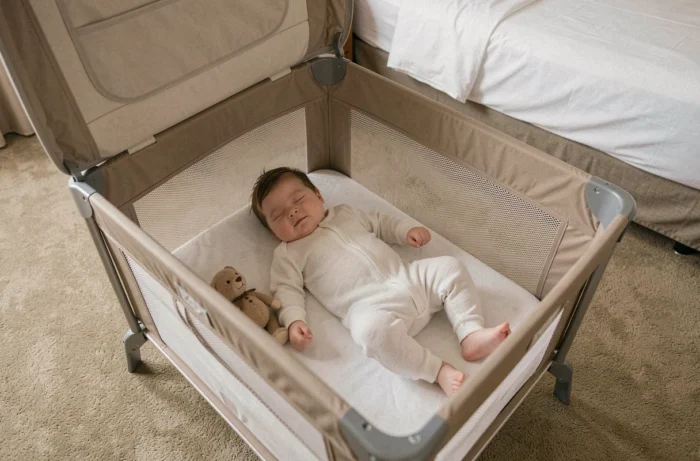
Most manufacturers indicate usage from birth up to about 3 years, or until the child reaches a certain weight (often around 15 kg). Models equipped with a booster or a second sleeping level allow positioning the newborn higher, facilitating daily tasks without bending down.
This booster is removed as soon as the child starts to sit up on their own, usually around 6 months. After this stage, only the lower level remains usable.
The effective lifespan also depends on the frequency of use. A travel crib used every weekend undergoes more mechanical stress than a model reserved for annual vacations. Inspecting seams, locking clips, and wall fabric at each deployment helps spot wear before it becomes problematic.
The choice between a classic model and an ultra-light model often comes down to a question of transport frequency. For occasional car trips, a 10 kg crib with a comfortable mattress is sufficient.
For regular journeys by public transport or plane, going below 6 kg with reduced bulk truly changes the experience. The decisive factor, in any case, remains EN 716 compliance: it is the only criterion that is non-negotiable.