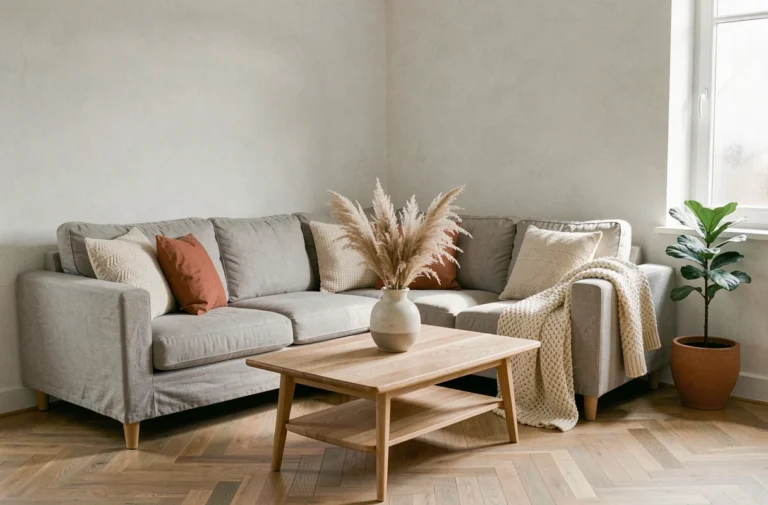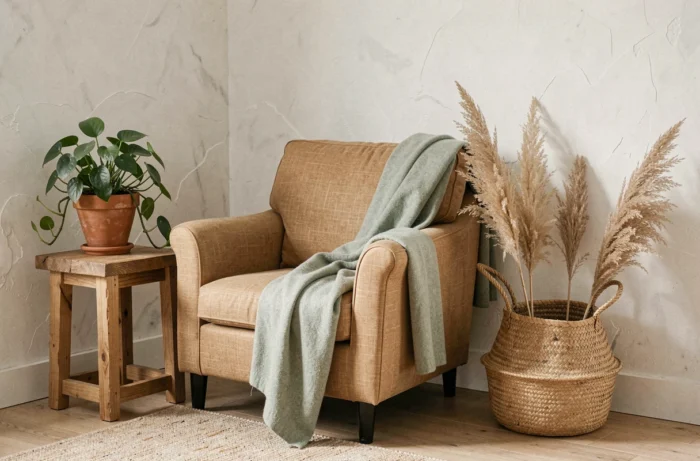
The interior design market strongly promotes natural materials (wood, linen, stone, rattan) and soft color palettes as the hallmarks of a calming home. This trend is accompanied by reassuring language around authenticity and well-being.
At the same time, the European regulatory framework is evolving: the Ecodesign for Sustainable Products Regulation (ESPR), which came into force in July 2024, sets out a framework for durability and repairability requirements by product category, with furniture among the priority groups in the 2025–2030 working plan.
Natural materials and healthy materials: a distinction to make before buying
Raw wood, limewash paint or clay plaster may be labelled “natural.” That says nothing about their actual emissions once installed in an enclosed room. Wood and other plant-based materials can emit volatile organic compounds, as can paints and finishes described as natural while they dry.
France’s indoor air emissions label, which is mandatory for many construction and decorating products (paints, floor coverings, plasters), rates emissions from A+ to C. It provides a practical reference when making a choice. However, this label does not cover furniture. A new piece made from reconstituted wood panels may therefore release formaldehyde without any indication on its packaging.
For a decorating project that aims to be both harmonious and healthy, checking the emissions rating of finishes and ventilating after installing new furniture are more reliable habits than relying solely on the word “natural.” Resources such as deco-asaiss.com make it possible to explore ranges of furniture and decorative objects while keeping these criteria in mind.

Soft colors for the home: how to create a cohesive palette
Powdery shades (off-white, rosy beige, sage green, gray-blue) create a calm visual atmosphere. Their appeal is not just a passing trend; it is based on a simple optical principle: desaturated colors reflect light diffusely, reducing harsh contrasts in a room.
Creating a cohesive palette means keeping the selection limited. Three or four similar shades are enough for an entire space. Adding one extra color in each room helps distinguish the different moods without disrupting the overall harmony of the home.
Choose colors to suit the room’s actual light
A warm beige can look yellow under cool LED lighting. Sage green can turn gray in a north-facing room with little natural light. Testing a paint sample directly on the wall in question at different times of day helps avoid unpleasant surprises once the entire surface has been painted.
Artificial lighting is an integral part of the palette. A warm-temperature bulb (around 2,700 K) preserves the softness of natural shades, while lighting above 4,000 K can distort them.
Maintenance and everyday use: the factor decorating inspiration often overlooks
Natural materials have physical limitations that aesthetics alone cannot overcome. Porous stone requires extra care in a kitchen, where grease stains can set in, while solid wood can swell and warp in a poorly ventilated bathroom.
A harmonious choice takes the actual use of each room into account. Here are some points to check before choosing a natural material:
- The material’s porosity in relation to exposure to water and stains (limestone in the kitchen, untreated terracotta in the entryway)
- Sensitivity to ambient humidity, particularly for solid wood in bathrooms or poorly ventilated spaces
- How often maintenance is needed: some natural wood oils need to be reapplied every six to twelve months
- Compatibility with underfloor heating, which can dry out and crack certain solid wood floors
Accepting that a natural material will age (leather developing a patina, untreated wood turning gray) is also part of the project. A harmonious home depends as much on the durability of your choices as on how they look at first.
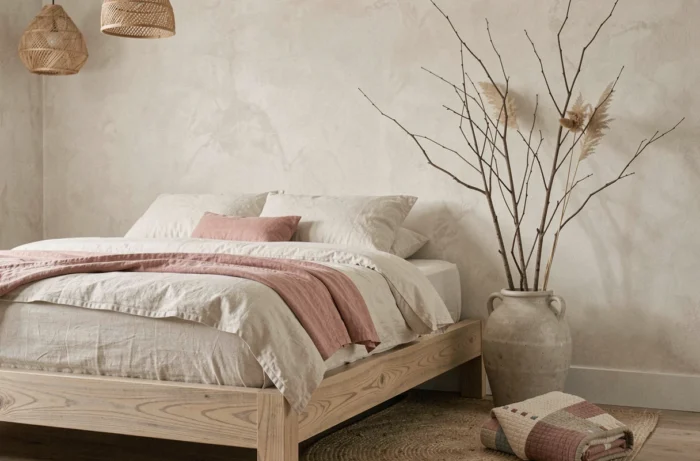
Furniture repairability: a design consideration that is still often overlooked
Repairability is not just an environmental issue. It directly affects how long a decorating scheme lasts. A rattan armchair whose weave can be repaired locally can remain part of a home for decades. A particleboard piece of furniture with a broken hinge often ends up in landfill.
The European ESPR regulation provides that specific repairability requirements for furniture will depend on subsequent acts, but the framework is in place. Choosing furniture with a demountable frame and replaceable parts anticipates this shift while supporting a cohesive interior over the long term.
Pair natural materials with repairable furniture
Solid wood, metal and rattan are easier to repair than composite materials. An oak tabletop can be sanded and oiled again. A linen or cotton seat can be reupholstered. As well as looking good, these materials make it possible to maintain a cohesive design without replacing everything when one item wears out.
A space’s harmony is not fixed in a single moment. It takes shape through pieces that can last for years, be maintained and repaired, and sometimes rearranged. Soft colors and raw materials help create that harmony, provided the initial choices also take into account what each material can withstand in everyday use.