
Changing the name of a pet owner in France is not just a matter of updating a simple address book. The process involves the National I-CAD File, an organization operating under the authority of the Ministry of Agriculture and Food, and is essential for the traceability of the animal throughout its life.
Whether the transfer occurs after a sale, a donation, an adoption from a shelter, or a death, updating the registered holder remains a legal obligation, the procedures for which have significantly evolved in recent years.
I-CAD Digitalization: What Has Changed Since 2024
Most guides describe the procedure without mentioning a recent turning point. Since February 1, 2024, changes of holder made online by a professional no longer result in the sending of a paper identification card. Breeders, shelters, and pet stores submit the file via their professional I-CAD space, and the new holder must then access their own online space to view and download their identification card.
This digitalization speeds up the process, but it creates a blind spot for those who are not comfortable with digital technology. Without a paper card received by mail, an adopter who does not create their holder space may never have the official document proving they are responsible for the animal.
For individuals transferring an animal to another individual, the procedure to transfer ownership of a pet remains accessible for free from the holder space on the I-CAD website, without the need for a veterinarian’s intervention.
Online Holder Change Declaration: Concrete Steps
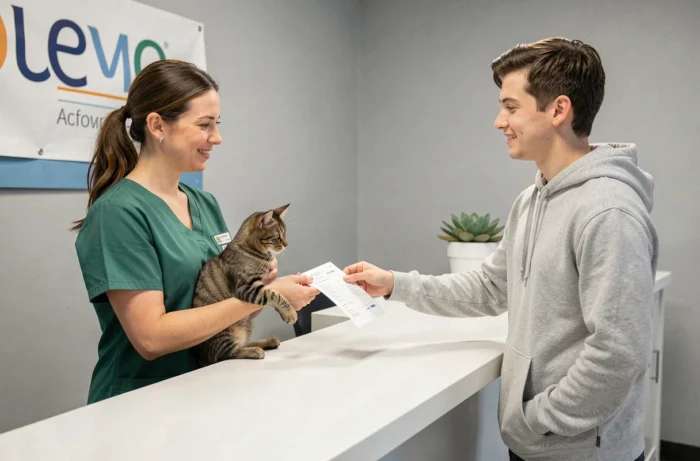
The online process is the fastest route. It takes place entirely from the I-CAD holder space and does not require any postal mailing.
- Log into your holder space on the I-CAD website, then select the section “Change the holder of your animal”.
- Fill out the form with the complete contact details of the new holder (name, first name, address, phone number, email).
- Validate the declaration. The new holder then receives a text message or email inviting them to activate their own space, from which they can download the identification card in their name.
The whole process takes just a few minutes. The update of the national file is instantaneous, which means that in case of loss of the animal right after the transfer, it is indeed the new holder who will be contacted.
Alternative by Postal Mail
Holders who do not have internet access can still make the declaration by mail to I-CAD. The paper form must be accompanied by the animal’s identification information (microchip or tattoo number) and the contact details of the new holder. Processing times are significantly longer than online.
Difference Between Holder and Owner in the I-CAD File
One point regularly generates confusion. The I-CAD registers a “holder,” not a “owner” in the legal sense. The holder is the individual who physically houses the animal on a daily basis and who will be contacted in case of escape or inspection. The notion of ownership, on the other hand, falls under civil law and may involve a transfer deed, a purchase invoice, or an adoption certificate.
In practice, the majority of holders are also owners. However, in certain situations (long-term custody, temporary placement in a foster family), the holder registered in the file is not the legal owner. This distinction has direct consequences: only the registered holder can initiate a new holder change in the I-CAD space.
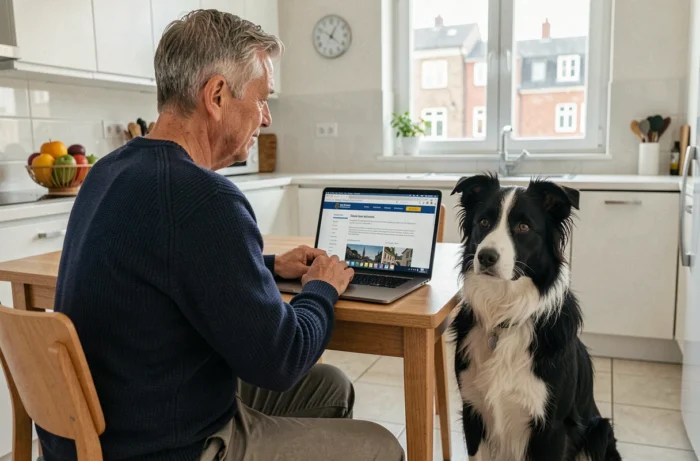
Required Documents When Transferring an Identified Animal
The transfer of an animal, whether free or paid, requires the provision of several documents to the new holder. The absence of any one of them can block the update of the file or cause issues during a veterinary inspection.
- The identification certificate (I-CAD card) mentioning the microchip or tattoo number of the animal.
- A transfer certificate signed by both parties, specifying the date of transfer and the contact details of each.
- The health record or European passport of the animal, up to date with vaccinations.
- For category 1 or 2 dogs, the specific documents required by regulations (ownership permit, behavioral assessment).
Without a valid identification number, no holder change can be recorded. If the animal is not yet identified, a visit to the veterinarian for microchip implantation is a mandatory prerequisite.
I-CAD Cyberattack and Reliability of the National File
I-CAD has been the victim of a cyberattack, raising questions about the security of personal data stored in the national file.
The contact details of holders (address, phone, email) are included in this database. For every registered holder, regularly checking that their information has not been altered in their online space is a reasonable precaution. Field reports vary on the actual extent of the incident, but vigilance remains essential.
Updating the holder of an identified animal is therefore not just a simple administrative click. Between the end of the paper card for professional transfers, the legal distinction between holder/owner, and the security issues of the file, each transfer should be handled with rigor, documents in hand and online space activated without delay.