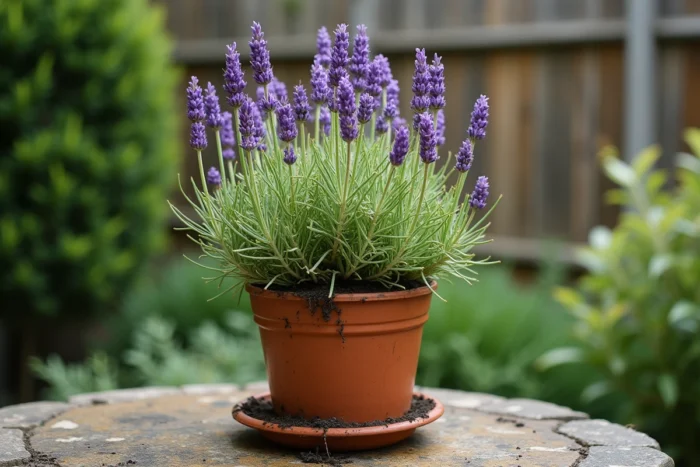
Your lavender is drooping, the stems are spreading away from the center, and the plant seems to be splitting in two. The problem is rarely linked to a single factor. Understanding why lavender falls over requires looking beneath the surface, at the roots, the soil, and the moment you take out the pruners.
Quality of lavender plants: the trap of the generic packet
Have you ever compared two lavenders purchased at the same time, one from a garden center and the other from a cheap seed packet? The difference in resilience after a winter can be spectacular.
Several experienced gardeners report a clear difference between cheap seedling lavenders and certified plants. The “lavender” mix packets sold without specific mention of the species (angustifolia, x intermedia, stoechas) often yield less hardy plants. They flop or blacken after the first winter in the ground.
The problem lies in genetics. A certified plant, propagated by cuttings, faithfully reproduces the behavior of the mother variety. A generic seedling produces variable individuals, some of which simply do not have the structure to remain upright in rain or snow. If you are looking for what to do if lavender is falling, start by checking the origin of your plants.
For pot cultivation, this factor is even more crucial. A weak plant in a confined substrate accumulates disadvantages and collapses within a few months.
Soil and watering: when the earth works against lavender
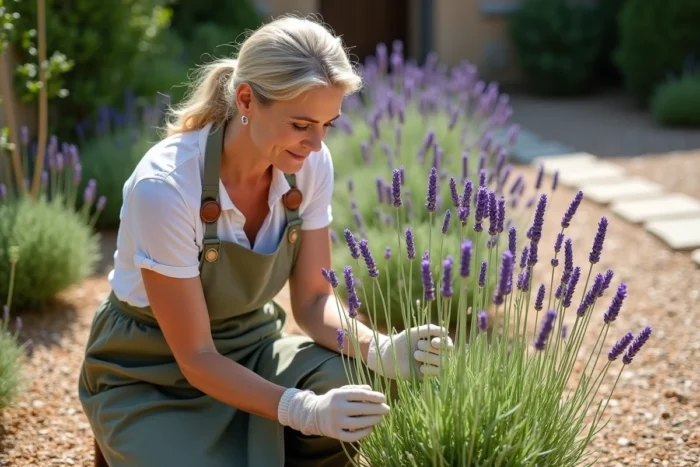
Lavender is a plant of poor, rocky, well-drained soil. Planted in clay soil, rich in organic matter or simply too compact, it develops a shallow root system. The poorly anchored stems eventually fall under their own weight.
Excess water, the most common cause
Overwatering kills more lavenders than drought. In wet soil, the roots rot. The plant loses its uprightness, the leaves turn gray and then brown. In pots, drainage is the first thing to check: a blocked hole or a saucer full of water is enough to trigger the process.
In the ground, heavy soils retain water in winter. The combination of cold and stagnant moisture causes root damage that lavender does not compensate for the following spring. It regrows unevenly, with some green branches and others dead, resulting in that characteristic “drooping” appearance.
The soil test before planting
Dug a hole thirty centimeters deep and fill it with water. If it takes more than an hour to seep in, the drainage is insufficient for lavender. Two solutions: raise the bed with a soil-gravel mix, or choose another location.
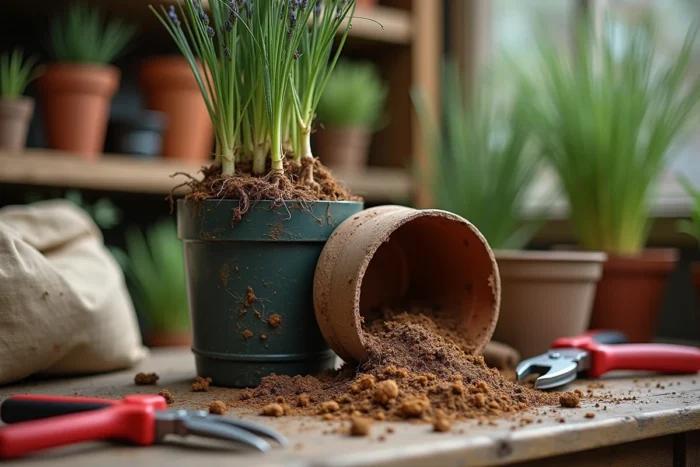
- In pots, use a substrate made up of half soil and half coarse sand or pumice, without a saucer.
- In heavy clay soil, add a layer of gravel at the bottom of the planting hole and mix sand with the existing soil.
- Avoid thick organic mulching (bark, mowing) at the base of the lavender: it retains moisture against the collar, exactly where rot sets in.
Pruning lavender: the wrong timing causes more damage than not pruning at all
Pruning is the most cited maintenance gesture in guides. What is less often mentioned is that pruning at the wrong time makes lavender fall more surely than not pruning at all.
Feedback from professionals in dry climates confirms this point. Heavy pruning in late autumn, or just before a frost event, leaves woody stems without active foliage. The plant no longer produces new shoots on the gray wood. It remains bare, then flops under winter rain and snow.
Where to cut, and especially where not to cut
Lavender does not regrow on old wood. If you prune below the leafy area, in the gray and woody part of the stem, the branch will not regrow. Over time, the center of the plant becomes bare, the peripheral branches spread apart, and the clump collapses on itself.
The good practice: prune after flowering, staying within the upper third of the green vegetation. Give the clump a rounded shape so that each branch retains foliage capable of restarting growth.
Lavenders cut back due to clearing obligations: a special case in Mediterranean areas
In departments exposed to fires (like Aude, for example), clearing around houses is a legal obligation. Some homeowners then cut their lavender beds located near facades very short or move them urgently.
The result is often the same. Older lavenders, brutally cut back, decline in the months that follow. The exposed old wood no longer produces new shoots. The plant opens up, falls, and then dies in parts.
If you are affected, it is better to gradually replace the old plants with young ones rather than forcing a lavender that has been established for years to regrow from a woody stump.
Recognizing a fungal disease on a drooping lavender plant
Not all drooping lavenders suffer from a simple soil or pruning problem. Some are affected by root diseases, particularly rot caused by soil fungi.
- The leaves yellow and then brown on only part of the plant, while the rest still looks healthy.
- The stems become soft at the base, sometimes with visible dark spots at the collar.
- When uprooting the plant, the roots appear black or brown, without the characteristic white rootlets of a healthy system.
A plant affected by root rot rarely survives. The priority is to uproot it to prevent contamination of neighboring plants, then not to replant lavender in the same spot without correcting the drainage.
The drooping lavender sends a clear signal about its growing conditions. Soil too heavy, excessive watering, poorly timed pruning, or fragile origin plant: in most cases, the problem can be corrected before the next planting. Choosing an identified plant, checking drainage, and respecting the pruning period after flowering is enough to keep dense and upright clumps for years.