
The fashion trends for the fall 2026 season are not just about a change in palette or silhouette. Behind the visible novelties on the runways, a European regulatory transformation is reshuffling the cards for brands and consumers. What indicators allow us to distinguish the underlying movements from the announcements in the fashion world this season?
Textile Regulation in Europe: What Changes Are Coming in 2026
Classic fashion pages rarely address the legal constraints affecting collections. However, recent European regulations are changing the way clothing is designed, sold, and disposed of.
| Regulatory Measure | Expected Timeline | Impact on Fashion |
|---|---|---|
| Ban on destruction of unsold textiles | Throughout 2026 | Brands can no longer destroy unsold clothing, accessories, and shoes |
| Mandatory Extended Producer Responsibility (EPR) for textiles | Operational systems in the coming years | Each producer funds the collection and recycling of their products |
| Digital product passport | Eventually mandatory for textiles | Traceability, reparability, and recyclability documented for each item |
The ban on the destruction of unsold goods, applicable from 2026 for a significant portion of players, pushes brands to reduce production volumes and extend the lifespan of collections. Massive end-of-season sales on overflowing stocks become a risky model.
The digital product passport will ultimately require each garment to carry a digital identity card detailing its composition, place of manufacture, and recycling options. To follow FashionUp’s news on these developments, this traceability marks a turning point in the relationship between brand and consumer.
Fall-Winter 2026 Fashion Trends: Materials and Silhouettes to Watch
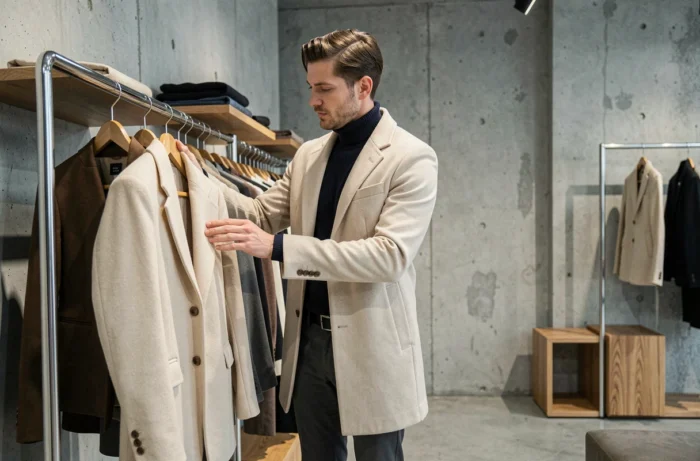
The runway shows for the fall-winter 2026 season confirm several directions that directly reflect sustainability constraints. Velvet, structured capes, and fitted cuts from the 90s are making a strong comeback, but with a different approach than in previous decades.
Velvet and heavy materials dominate winter offerings. This choice is not purely aesthetic: these textiles better withstand prolonged wear cycles, aligning with the sustainability logic imposed by European eco-design requirements.
In terms of colors, the season revolves around deep shades. The palettes announced for the upcoming seasons by trade shows confirm this trend towards saturated tones, far from the pastels that dominated spring collections.
Key Pieces for the Season
- The long or mid-length cape, available in thick wool or recycled materials, is gradually replacing the oversized coat in autumn wardrobes
- The fitted black pant, directly inspired by the minimalism of the 90s, returns as a staple piece for everyday wear
- The crochet dress, worn layered over autumn layers, extends a summer trend into the cold season
- The ruched loafer, spotted at several Fashion Weeks, establishes itself as the alternative to the classic loafer for the season
These pieces share a common point: they prioritize longevity over seasonal novelty. A well-cut jean, a quality cape, or a durable leather loafer can last through several seasons without appearing dated.
Fast Fashion vs. Sustainable Fashion: Data Opposing Two Models
The recently revised European framework directive on waste makes Extended Producer Responsibility regimes mandatory for textiles in all member states. Each brand will have to finance the end-of-life of its products in the coming years.
For fast fashion brands, whose model relies on rapid rotations and low prices, this obligation represents a structural cost increase. Brands that produce limited volumes with sustainable materials can more easily absorb this burden, as their products generate less waste per unit sold.

The European framework on eco-design for sustainable products adds an additional layer. It imposes a framework of sustainability and circularity at the product level, not just at the brand level. Monthly rotating capsule collections become difficult to justify in this regulatory context.
Visible Consequences on Collections
Several houses are reducing the number of references per season. The principle is simple: fewer pieces, better designed, sold for longer. This logic translates into more versatile looks, designed to work from the office to everyday life without multiplying purchases.
Natural and recycled materials are gaining ground in mid-range collections. Linen, certified merino wool, and recycled polyesters are now appearing in accessible price ranges, where they were previously confined to the premium segment a few seasons ago.
Style and Fashion Trends: What Fall 2026 Changes for the Consumer
The accumulation of these European regulations is changing the usual benchmarks of fashion shopping. The consumer who follows trends no longer just chooses a color or a cut: they are integrating, sometimes unknowingly, criteria of traceability and sustainability into their purchases.
- Labels are becoming more detailed, with information on the origin of materials and manufacturing conditions
- Take-back and second-hand programs are multiplying among retailers, in anticipation of mandatory EPR
- Permanent collections (or “season-less”) are gaining ground against ephemeral collections
The chic of fall 2026 is defined as much by the choice of a well-cut piece as by the ability to invest in clothing designed to last several seasons. The outfit ideas circulating on social media reflect this evolution: fewer massive hauls, more compositions around strong pieces.
The ban on the destruction of unsold textiles is gradually coming into effect in Europe. This alone restructures the available supply in stores and online, with more targeted stocks and collections designed to minimize surpluses. The fashion trends of tomorrow will be read as much in regulations as on the runways.