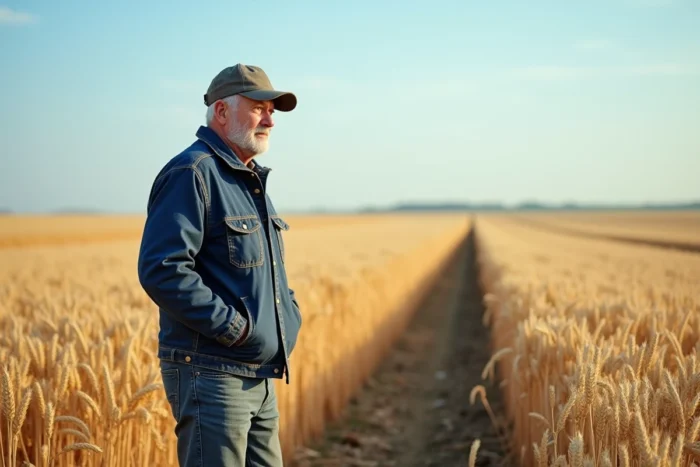
Land concentration in France is reshaping the map of agricultural fortunes. The most profitable farms no longer resemble the family farms of thirty years ago: they operate like holdings, with corporate structures, real estate assets, and diversifications that far exceed raw production. Understanding the richest farmer in France first requires looking at where the money actually comes from.
Corporate structures and land ownership: the patrimonial mechanics of large farms
Agricultural wealth is increasingly measured not by operating income. It is hidden in shares of agricultural companies (GAEC, EARL, SCEA) and in land owned outright or through intermediary structures. The rise of shares in agricultural companies in land transactions profoundly changes the profile of the wealthiest operators.
A farmer who owns several hundred hectares through a SCEA does not receive a salary comparable to that of a traditional mixed farmer-breeder. Instead, they capture a capital gain linked to the appreciation of land, which progresses independently of the price of wheat or milk. Large farms continue to gain ground in land occupation, while their numbers decline over time.
We observe that this structural concentration produces balance sheets that rival those of industrial SMEs, but with one peculiarity: liquidity remains low. Wealth is immobilized in land and buildings. Tracing the journey of a wealthy farmer in France often means mapping a land portfolio rather than a profit and loss account.
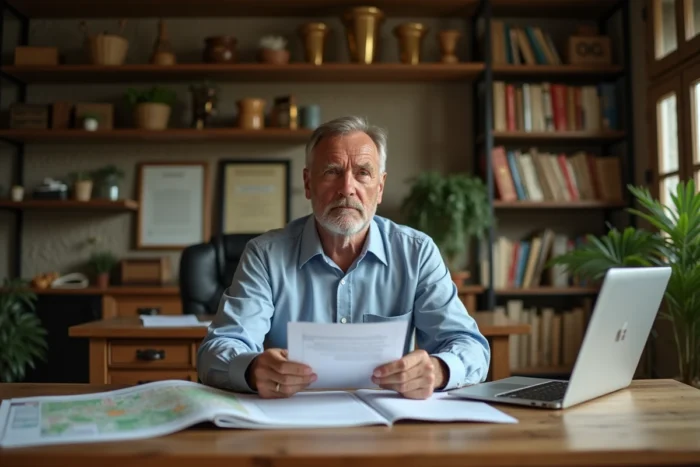
Agricultural wealth or wealth from agriculture: the blurred boundary of rural fortunes
The most troubling question in the sector can be summed up in one sentence: do the richest farmers still derive their fortune from farming itself? In the majority of cases, the answer is no, or at least not exclusively.
Professional agricultural fortunes are shifting towards three poles:
- Processed agri-food, where the margin lies downstream of production (packaging, private labels, controlled distribution channels)
- Rural and peri-urban real estate, with agricultural land reclassified or leased to renewable energy operators (photovoltaics, methanization)
- Agricultural finance and wealth optimization, through ownership structures that allow capital to be transferred without fragmentation
A cereal farmer from Beauce who invests in a methanization unit, rents rooftops to a solar installer, and holds shares in a storage cooperative is no longer a farmer in the strict sense. They operate as a rural asset manager. Wealth does not come from the sale price of a quintal of wheat, but from the stacking of ancillary income on a broad land base.
The trap of declared income
The testimony of François, a farmer in Allier living on 800 euros a month while being “rich on paper,” perfectly illustrates this gap. The gross wealth of a farmer says nothing about their available cash flow. The largest farms show considerable assets, but a significant portion is absorbed by loan repayments, equipment renewal, and social charges.
The distinction between wealth and income explains why rankings of “the richest farmer” are misleading. They measure financial surface area, not standard of living.
Installation profiles and agricultural wealth trajectories in France
Inrae highlights the diversity of installation paths in agriculture. New success stories are more often hybrid than inherited. The classic model (the farmer’s son taking over the family farm and gradually expanding it) coexists with profiles of entrepreneurs from other sectors.
Three dominant trajectories emerge among high-wealth operators:
- The prepared heir, who benefits from a tax-optimized transfer of land and an already established cooperative network
- The career changer, often from the agri-food or finance sector, who acquires land as a long-term investment
- The consolidator, a medium-sized operator who absorbs neighboring farms during retirements, taking advantage of the continuous decline in the number of farms
The third profile is the most common in large crop areas. The dynamic is mechanical: fewer installations, more available land, accelerated concentration for those who remain.
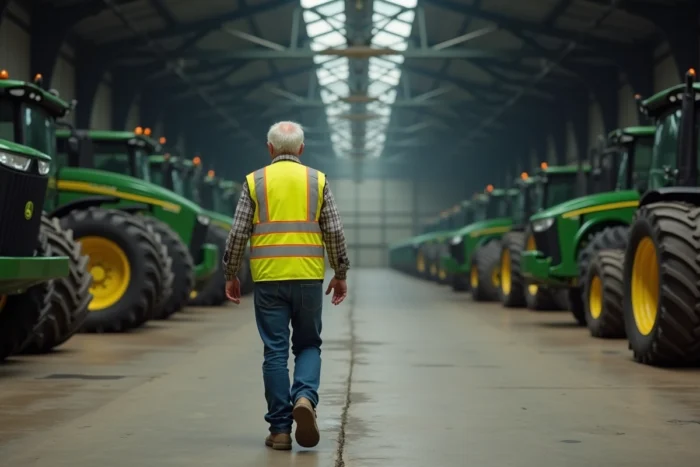
The role of CAP subsidies in leveraging
A small proportion of French farmers capture a disproportionate share of direct payments from the Common Agricultural Policy. These payments, calculated largely per hectare, mechanically amplify the advantage of larger farms. The larger the area, the higher the amount of aid received, which facilitates access to credit and thus the acquisition of new plots.
This virtuous (or vicious, depending on the perspective) circle explains why agricultural wealth is structurally concentrated rather than conjunctural. Attempts to cap CAP payments per farm face the lobbying of large structures and the complexity of corporate arrangements that allow land to be spread across multiple legal entities.
Millionaire farmer: what agricultural wealth reveals about the French model
The wealth of the largest French operators does not reflect a healthy agriculture. It reflects a transfer of value from agricultural labor to land rent. The average income of farmers remains modest, and the gap with the wealthiest operators continues to grow.
The French model simultaneously produces financially struggling operators and considerable agricultural wealth. This duality is not an accident: it results from public policies that subsidize surface area rather than employment, and from a land market where regulatory mechanisms (SAFER) struggle to contain concentration.
The richest farmer in France is probably not the one you imagine in boots in a field. They are a portfolio manager of land and agri-food, whose fortune relies more on asset appreciation than on crop sales. The title “farmer” is almost incidental.