Finding activities to keep the whole family occupied isn’t limited to big weekend outings or holiday weeks. The most memorable moments often arise from short, accessible activities slipped in between snack time and dinner. This article offers concrete ideas for leisure activities for both young and old, designed for everyday life, requiring little equipment and no special budget.
Leisure by constraints: choosing an activity based on the current context
Most idea lists line up dozens of suggestions without considering a simple parameter: what conditions are you in when searching? Rainy days, heat waves, parental fatigue, available garden space or not, a three-year-old mixed with a pre-teen—these all radically change what works.
Some specialized sites like Le Bonton now offer a classification by age, location, energy level, and duration. This constraints-based approach is much more useful than a generic catalog. Before choosing, ask yourself three questions: how much time do you have, what space is available, and what energy level remains in the group?
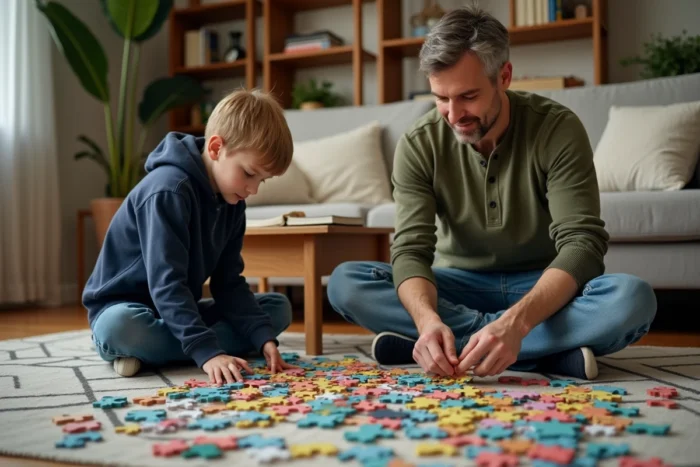
- On rainy days with low energy: cooperative board games, collage workshop with recycled magazines, free construction with cardboard
- On nice days with an outdoor space: homemade treasure hunt (hiding clues in the garden or nearby park), sensory gardening, balance course with natural elements
- When on the go or in the car: observation games (“the first to see”), stories to complete in turns, themed riddles
- When the adult needs quiet: free drawing with an open prompt (“draw your dream house”), listening to a children’s podcast, sorting nature treasures collected the day before
To explore other formats suitable for each situation, you can find leisure activities on the 1 Blog 1 Jour website categorized by various themes and accessible to all ages.
Family micro-adventures: strong leisure activities in less than an hour
In recent years, the concept of micro-adventure has taken hold in French family practices. The idea: create a strong moment in less than an hour, close to home, without a car or reservations. Several specialized media, including Magicmaman, highlight this short and recurring format.
A “curiosity safari” involves going out with a bag and a specific mission: find five different textures, photograph three insects, bring back a stone that looks like an animal. The activity lasts half an hour and produces a tangible memory that the child keeps.
The mini-nature museum
After each outing, the finds are arranged on a tray or in a box. The child labels them, sorts them, invents a story for each object. This extension transforms a simple walk into a playful activity that lasts several days.
The memory capsule
A more intimate variant: each family member slips a word, a drawing, or a small object related to the day into a jar. The jar is opened a month later. This ritual takes a few minutes and works equally well with a four-year-old as with a teenager.
Motor and sensory activities without specific equipment
Specialized resources in family motor skills show a clear trend: daily leisure activities that work on balance, coordination, and the senses, without purchases. The living room, hallway, or a piece of sidewalk is sufficient.
A balance course can be made in a few minutes with cushions, a rope laid on the ground, and an overturned chair. The child negotiates the obstacles barefoot to stimulate proprioception. The adult can time it, or better yet, do the course as well.
Sensory gardening with children
Even without a garden, a few pots on a windowsill allow for planting herbs. The child touches the soil, smells the basil, observes the germination. Sensory gardening develops patience and attention to living things, two skills that screen games hardly engage.
For older children, a daily motor challenge (balancing on one foot while brushing teeth, crossing the hallway like a crab) can easily be integrated into the routine. These micro-challenges quickly become a spontaneous family game.
Free creative activities at home for all ages
The most common barrier to manual activities is not a lack of ideas, but the fear of having to buy materials. Most effective creative leisure activities cost nothing.
- Recycling workshop: transforming toilet paper rolls into characters, egg cartons into caterpillars, bottle caps into painting stamps
- Homemade salt dough: flour, salt, water. The children mold, the adult bakes it, then everyone paints
- Collective mural: fixing several sheets to the wall or floor, assigning an area to each participant, and letting the drawings come together
The recycling workshop teaches how to create with what you have, without a prior shopping list. A two-year-old glues and tears. An eight-year-old designs and assembles. The activity naturally adapts.
Simple cooking together as a family
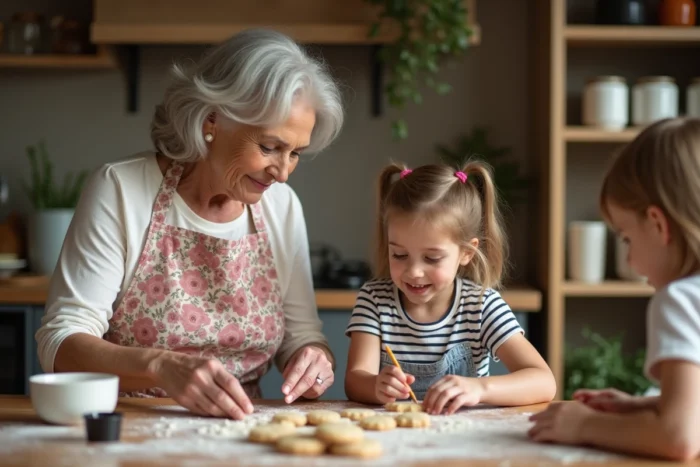
Preparing a snack together remains one of the most unifying leisure activities. A yogurt cake requires four ingredients and takes a good half hour of measuring, mixing, and waiting in front of the oven. Cooking together structures time and produces an immediate result, which motivates even children reluctant to manual activities.
Keeping children occupied daily requires neither a budget nor complex organization. What makes the difference is adapting leisure to the real context of the moment (energy, space, weather) rather than following a fixed list. Families that integrate short sensory, motor, or creative activities into their routine find that the famous phrase “I’m bored” becomes rarer, replaced by a reflex: “What are we doing together?”